How to Hide Dash Cam Wires
To hide a dashcam cord, use a vehicle-approved route and secure it with suitable trim gaps, clips, or covers. Keep the cable clear of airbags, pedals, and moving parts, with a little slack at each connector.
On this page (10 sections)
- How do you hide a dashcam cord in five steps?
- Where should a dashcam wire run?
- How can you hide a dashcam cord without removing trim?
- How do you route a dashcam wire around airbags?
- Should you use a trim tool to tuck the wire?
- How do you hide a rear dashcam wire?
- Can you run the cord to a hardwire kit instead of the outlet?
- What mistakes should you avoid when hiding the cord?
- What should you check after hiding the wire?
- Which supplies should you choose to hide a dashcam cord?
To hide a dashcam cord, use a vehicle-approved route and secure the wire with suitable trim gaps, clips, or covers. Keep it clear of airbags, pedals, and moving parts, and leave a little slack at each connector.
Choose the route before buying accessories. Clips hold a cable in place, covers conceal short visible sections, and trim tools help with permitted access; you may need only one of these.
How do you hide a dashcam cord in five steps?
Plan the route before attaching anything, then work from the camera toward the power source. Lay out the whole cable first so you can spot a length problem before hiding it.
- Position the camera and identify its power source using the camera and vehicle instructions.
- Lay the cable along a permitted path, avoiding airbag areas, sharp edges, pedals, and controls.
- Allow slack for the camera mount and connectors without leaving dangling loops.
- Secure the cord in suitable gaps or with clips and covers, following their attachment instructions.
- Check cable clearance, vehicle movement, and camera power while parked.
Don't pull the cord tight to gain a few extra inches. If it won't reach, check which cable or power arrangement your camera supports before continuing.
Our guide to how to install a dash cam covers camera placement and the full setup. For a rear camera, also see whether you need a rear dash cam.
Where should a dashcam wire run?
Follow a permitted path along the cabin edges toward the power source. The outlet location, trim design, and airbag layout determine which side of the vehicle makes sense.
The windshield and headliner edge may offer a route, but an open gap doesn't confirm that the space behind it is suitable. Check before continuing toward a side pillar, where airbags may sit behind trim.
Near the dashboard, keep the cord away from vents, storage lids, and steering adjustments. Don't bridge an open space with an unsupported cable or leave excess wire beneath the driver's feet.
If you're still choosing a camera, consider its connector position and power options alongside image quality. Our guide to how to choose a dash cam explains the wider buying decisions.
How can you hide a dashcam cord without removing trim?
Use clips for cable control and a cover for concealment when a permitted route leaves the cord exposed. Neither accessory makes an unsuitable route safe.
How to hide a dashcam cord with adhesive clips
Choose the KnotKing Adhesive Cable Clips when you need to guide a cable around corners or along several short stretches. The pack contains 60 clips for cords up to 5.6 mm in diameter.
These suit drivers who want to secure a slim cord without opening panels. Skip them if you want the wire fully concealed between attachment points or your chosen surface is leather, rubber, or silicone.
Use them on suitable smooth surfaces that are clean and dry, avoiding rough, oily, or dusty areas. KnotKing directs you to press each clip firmly for 3 seconds and wait 24 hours before loading thicker or heavier cables.
Place clips where the cable changes direction or needs support, without bending it sharply. A clip should guide the wire rather than pull against the camera connector.
When a short cable cover makes more sense
Choose the Car Concealed Wire Cover when a short visible stretch needs to disappear beneath a channel. Its 4 cuttable PVC pieces measure 7.09 x 0.63 inches each and accept cords under 5 mm in diameter.
This suits an exposed run beside a dashboard or console where a suitable mounting surface exists. Skip it for a cable at or above the diameter limit, tight bends, or a route interrupted by controls and panel seams.
Measure the run and check the cable's fit before cutting the cover. Clean the attachment surface, remove the tape backing, place the cord in the groove, and attach the cover without trapping a connector underneath.
QZTYTY describes the PVC as heat resistant and waterproof. That doesn't establish that its adhesive will suit every interior finish, so follow the attachment guidance and monitor the cover for lifting.
How do you route a dashcam wire around airbags?
Use vehicle-specific routing guidance, especially at the headliner and side pillars. A hidden cable can still interfere with an airbag if it crosses the deployment path.
Check the owner's manual for airbag locations and restrictions on interior accessories. Don't attach clips to airbag covers, pull pillar trim without the correct procedure, or push a cable into an unknown space.
If the manual doesn't establish a usable route, have a qualified installer identify one. Visible airbag labels help locate concerns, but they don't show every part behind the trim.
Should you use a trim tool to tuck the wire?
Use a trim tool only when a permitted route needs gentle access beneath an edge. Skip it when clips or an existing accessible gap can secure the cable without moving a panel.
The Tresalto Trim Removal Tool Kit contains 5 nylon pry tools in different shapes for trim and clip work. It suits someone following a known panel-access procedure who needs several tool shapes rather than a metal screwdriver.
Nylon avoids metal-to-trim contact, but careful technique still matters. Use light pressure at the correct release point and stop if the panel resists, bends, or reveals an unfamiliar component.
Skip panel work if you don't know how its fasteners release. Don't use the tool to drive a cord deeper into a seam, and check that reseated trim doesn't pinch the wire.
How do you hide a rear dashcam wire?
Lay out the entire rear cable before securing the front section. A rear installation needs enough length for its route, connectors, and any hatch movement.
Check the path past doors and seats with the vehicle parked. Keep it clear of seat belts, sliding tracks, folding mechanisms, and areas where bags or cargo can snag it.
For a camera mounted on a moving hatch, follow the camera and vehicle instructions for the transition from the cabin. Don't force a connector into an existing wiring boot or route a loose cable through a closing seal.
Leave enough slack for the hatch to open fully without pulling the connector. Secure the remaining cable so the closed hatch doesn't create a hanging loop.
A front and rear setup has different wiring needs from a front-only camera. Compare them in front and rear vs front-only dash cams.
Can you run the cord to a hardwire kit instead of the outlet?
Yes, a compatible hardwire kit can replace the cabin-outlet connection. It changes the power connection, but the cable still needs a permitted route through the interior.
Decide on the power source before finishing the cable run. Otherwise, you may secure the cord toward an outlet and then need to reroute it toward the fuse box.
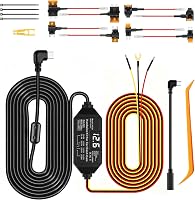
Read how to hardwire a dash cam before choosing a kit, and use a qualified installer if you're unsure about fuse-box work. Check compatibility with your camera rather than choosing a kit just because its plug fits.
For parked recording, learn what dash cam parking mode does. Review whether a dash cam drains the car battery before deciding how it should receive power with the engine off.
What mistakes should you avoid when hiding the cord?
Avoid tight bends, strained plugs, and unsupported excess cable. A neat appearance should come from a planned route rather than pulling the wire taut.
Measure the cable itself before choosing clips or covers. Leave connectors outside narrow channels so you can unplug the camera without removing the entire run.
Don't press adhesive onto a dusty dashboard or stretch the cable between attachment points. If an attachment lifts, correct the surface or route instead of relying on the neighboring clip to carry more tension.
Keep spare cable secured in a permitted location away from heat sources and moving parts. Don't wedge a bundle behind a panel and force the panel closed over it.
What should you check after hiding the wire?
Check movement, connections, and attachment points before driving. These checks confirm clearance and operation; the airbag route must already be established.
While parked, adjust the steering wheel and seats, operate nearby controls, and carefully open doors and the hatch. Watch for pinching, stretching, or cable movement at the connectors.
Power on the camera and confirm that each connected camera works. If the camera is removable, make sure you can detach it without tugging the secured cable.
Recheck clips and covers after hot weather, interior cleaning, or moving the camera. Replace attachments that no longer hold, and keep cleaning products away from adhesive edges where practical.
Which supplies should you choose to hide a dashcam cord?
Choose by the exposed section you're solving. You don't need all 3 products to hide a dashcam cord.
- Choose KnotKing clips for supported cable runs and corners where some visible wire is acceptable.
- Choose the QZTYTY cover for a short exposed stretch that fits its channel and has a suitable attachment surface.
- Choose the Tresalto tools when a confirmed route requires opening a permitted trim edge.
If the existing trim route holds the cable securely without strain, extra accessories may add little. Once the cord is secure, follow how to install a dash cam in your car for the remaining setup steps.
Frequently asked questions
How do you hide a dashcam cord without removing trim?
Use adhesive clips on suitable smooth surfaces or a short cable cover where the cord remains visible; accessible trim gaps are another option only when your vehicle instructions permit that route. Measure the cable first, keep connectors accessible, and avoid running it across airbag covers or into the driver's footwell.
Can a dashcam cable go behind the headliner?
Only use the headliner edge when the vehicle instructions permit cable routing there and you can confirm the path avoids airbags; a gap is not proof that the space behind it is suitable. Don't push the wire deeper to make it disappear; ask a qualified installer if the route is unclear.
How do I hide a rear dashcam wire?
Lay out the full rear cable along a route permitted by the vehicle and camera instructions before attaching anything; keep it away from seat belts, seat tracks, hinges, and airbag areas. Check hatch movement while parked, leaving enough cable for movement without loose loops that passengers or cargo could catch.
Is it safe to tuck dashcam wires into trim?
Tucking a cord into trim is suitable only when you can confirm its route avoids airbags, sharp edges, and moving parts. Don't force the cable into a tight seam or let trim pinch it; a plastic tool can help with access, but it cannot confirm that the hidden route is safe.